Is a driver fitting worth it? What it actually fixes
The driver is the club almost everyone buys off the shelf, and the one a shelf spec is most likely to get wrong. Here’s what a fitting really changes, and who it won’t help much.
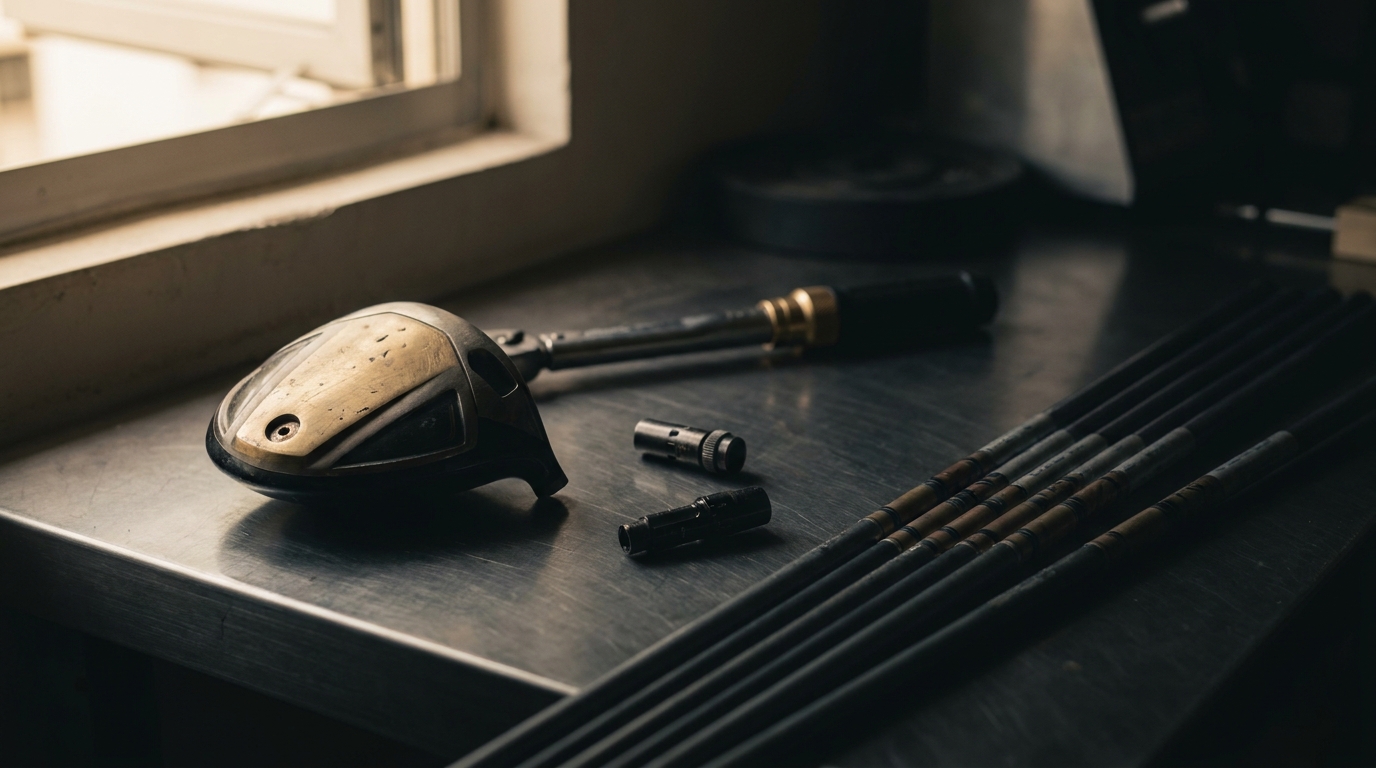
It’s the club you hit hardest, the club you bought quickest, and the club most likely to be wrong for you. So is a driver fitting worth it? For most golfers who’ve never had one, yes. For a few, honestly not much. Here’s how to tell which you are.
We’re an independent studio. We don’t sell a brand and we’re not paid to move any particular head, so a fitting here recommends what your numbers say, not what’s sitting on a shelf. That’s worth knowing before you read the rest, because it’s the whole reason we can be straight with you about who shouldn’t bother.
What a driver fitting changes
A driver fitting isn’t one adjustment. It’s a handful of dials, and each one moves the ball flight in a different way:
- Loft. Too little and you launch flat and lose carry; too much and you climb and spin. The right loft turns your speed into distance instead of height.
- Face angle. Open, square or closed at address nudges your start line left or right. Get it wrong and you fight a miss that was built into the club.
- Shaft. Weight, flex and profile change how the head arrives at the ball, your launch, your spin and your timing. This is usually the single biggest lever on a driver.
- Length. A longer shaft promises speed but costs you the centre of the face. Most golfers strike a slightly shorter driver better, and centre contact beats raw length every time.
- Head weighting. Moving mass around the head shifts spin and shot bias, so a fade-biased or draw-biased setup can quietly straighten out your usual miss.
None of these is exotic. The point of a fitting is finding the combination that suits your swing, measured, not guessed, so the club stops working against you.
Why the driver is the easiest to get wrong
Ask why the driver of all clubs, and it comes down to three things.
First, it’s the club people buy on impulse. A new head comes out, the marketing promises more distance, and it goes in the bag with a stock shaft and stock settings that were chosen for nobody in particular. Almost no one buys a driver off the shelf and then checks whether it fits.
Second, it’s the least forgiving of a mismatch. The driver has the longest shaft and the lowest loft in the bag, so it’s the hardest to hit out of the middle, and a small error at impact is stretched over 200-plus metres of carry. Two degrees of the wrong loft or a shaft that’s too stiff barely shows on a wedge. On a driver it’s a lost fairway.
Third, ball flight off the tee is where your misses cost the most. A slice on a short iron leaks a few metres. The same fault with a driver is out of bounds. Getting the longest club matched to your swing removes the errors you were never going to out-practise.
Most golfers are playing a driver that was never checked against their own swing. That’s not a knock on them, it’s just how drivers are sold. It’s also why the driver is, for a lot of people, the fitting with the most to give back.
What happens in the session
A driver and woods fitting runs 90 minutes, one golfer at a time. It’s our most-booked fitting, and here’s roughly how it goes.
We start with the driver you already own on the launch monitor, so we can see exactly what it’s doing, your ball speed, launch, spin, start line and where the misses go. That’s the baseline everything else is measured against. Then Ian works through the dials, loft, shaft, length, head, testing changes against that baseline rather than against a hunch.
Across the session you’ll hit 120 or more swings. That number matters. A handful of shots tells you nothing, because everyone hits a couple of pearlers with a club that doesn’t suit them. Enough repeats and the pattern shows up honestly, and that pattern is what we fit to. Ian runs the whole thing start to finish, so nobody hands you off halfway.
You leave knowing what your driver is doing, what a better-matched setup looks like on the numbers, and whether that’s a change to your current club or a new build. No pressure to decide in the bay.
Want to see what your driver’s really doing off the tee?
Book a driver fittingWho benefits, and who won’t
We’d rather you spend the money well, so here’s the straight version of both sides.
You’ll likely get a lot out of it if you’ve never had your driver fitted, if you lose tee shots right or left more than you’d like, if your driver is a few years old, or if you bought it off the shelf and just play the settings it came with. Any one of those is a decent reason. Several together and the odds are good there’s distance or fairways to be found.
You probably won’t gain much in two cases. One, if you were properly fitted recently and your swing hasn’t changed since, your driver is likely already close, so save your money. Two, if you’re a genuine beginner whose swing is still changing week to week, a fitted spec goes out of date fast, and you’re better spent on lessons and a forgiving driver first, then a fitting once your swing settles. We’ll tell you as much if that’s you.
Is your driver costing you distance?
A checklist can only hint. Ten minutes on the launch monitor tells you far more.
What it costs
Clear numbers, no surprises. A driver or woods fitting is a flat fee. Components are a separate cost, based on what your fitting shows you need.
| Session | Time | Price |
|---|---|---|
| Swing & equipment analysis | 30 min | SGD 50 |
| Driver / woods fitting | 90 min | SGD 150 |
If you’re not yet sure the driver is your problem, start with the SGD 50 analysis. It reads your swing and current bag on the launch monitor in 30 minutes and tells you honestly where you’re losing shots, before you commit to a full fitting. Anything beyond fitting, a reshaft, a regrip, wider equipment optimisation, is quoted per job once we’ve seen what you need.
- A driver fitting sets loft, face angle, shaft, length and head weighting to your swing.
- The driver is easiest to get wrong off the shelf, small errors are magnified over 200 metres.
- The session is 90 minutes, 120+ swings on a launch monitor, our most-booked fitting.
- Worth it if you’ve never been fitted, miss right or left, or bought off the shelf.
- Skip it if you were fitted recently or your swing is still changing fast.
- Driver fitting is SGD 150; a SGD 50 analysis tells you if you even need it.
Because we’re independent, the head we suggest follows your numbers, not a badge on the wall. You can see the makes we work across on our brands page. For the fuller picture on fitting itself, what it is, what happens and what it costs, read our complete guide to golf club fitting in Singapore.
Common questions
Is a driver fitting worth it?
How long does a driver fitting take?
Do I need to buy a new driver to get fitted?
Can you fit the driver I already own?
How much does a driver fitting cost?

Ian, Precision Golf SG
Ian is a golf professional and club fitter. He fits and builds clubs, one golfer at a time, and wrote this from the driver questions he answers across the bay every week. Meet the fitter.