New clubs, or a fitting first? How to spend smart
The most expensive way to buy golf clubs is to buy them first and find out later they don’t fit. Here’s the order that saves you money, from an independent studio with no brand to push.
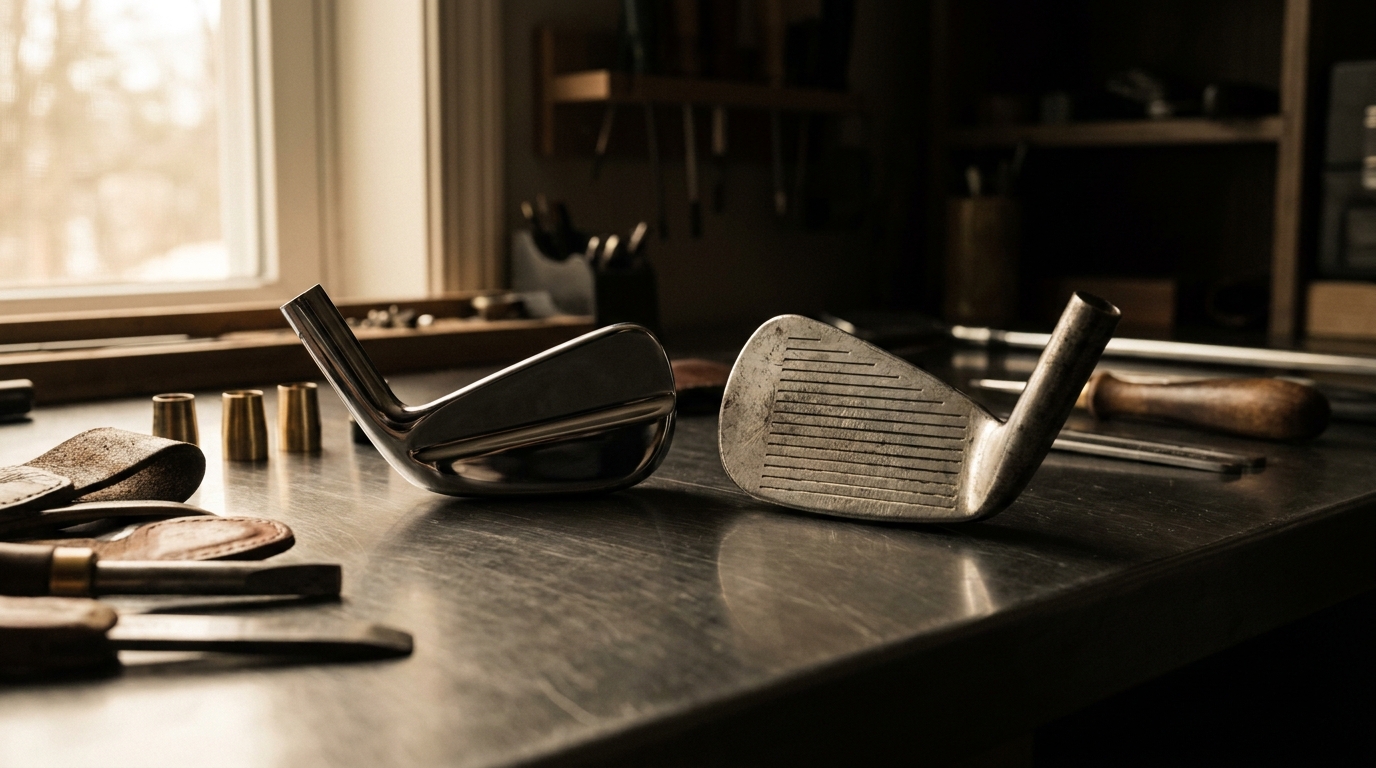
You’ve saved up for new clubs. The natural next step feels obvious: go and buy them. But the order most golfers use, buy first, worry about fit later, is the one that quietly costs the most.
We fit and build clubs for a living, and we’re independent, so we’ve no house brand to move and no reason to steer you toward a shiny new bag you don’t need. Here’s how we’d think about the money before it leaves your account.
The expensive mistake
It goes like this. You buy a full set off the rack, or the model a mate swears by, or whatever’s on offer. It feels great for a fortnight. Then the misses creep back, the long irons still balloon or dive, and the set never quite clicks. The clubs weren’t bad. They just weren’t yours.
Off-the-rack clubs are built to an average golfer who doesn’t exist. Standard length, standard lie, a stock shaft chosen for the widest market. If your build, swing speed or delivery sits away from that average, and most people’s does, the set is fighting you from the first swing. You can spend months grooving compensations for a problem the club created, or spend again to put it right.
That’s the real cost of buying first: not the clubs, but buying twice.
Get fitted before you buy, not after
A fitting reads your actual swing on a launch monitor and tells you the specs that suit it: length, lie, shaft, head type, weighting. Do that before you buy and you shop from your own numbers instead of a guess. You know what to look for, and, just as usefully, what to ignore.
Think of it as the cheapest insurance on the biggest golf purchase most people make. A fitting is a small fraction of the price of a new bag, and it stops you spending the large sum on the wrong thing. Buy the clubs, then get fitted, and you’re often paying to discover you bought the wrong shaft.
Because we’re independent, the recommendation follows your numbers, not a shelf. We fit across brands and specify the heads and shafts your data points to, whoever makes them. There’s no house label to defend.
New clubs, or fit what you’ve got?
1. Are you planning to buy new clubs soon?
2. How do you feel about your current set?
A rule of thumb, not a verdict. Thirty minutes on the launch monitor tells you far more than any quiz.
When fixing your current set wins
Here’s the part the golf shops rarely mention: quite often you don’t need new clubs at all. A fitting on your existing bag can show it’s closer than you think, and that a tweak beats a replacement.
- Lie and length. A couple of degrees or a few millimetres out sends the ball offline on a good swing. Bending and cutting is minor next to a new set.
- A reshaft. Heads that suit you on the wrong shafts are a common find. New shafts can transform clubs you already own.
- Set consistency. If every iron feels like a different club, we MOI match the set so it plays as one. That’s a bench job, not a purchase.
These are quoted per job, because it depends what your clubs need, but the principle holds: fixing good clubs usually costs less than replacing them, and you keep the feel you already trust. Sometimes the numbers really do call for new clubs, and then you buy with proof instead of a hunch. Either way, the fitting comes first.
New clubs are the answer less often than the industry would like. Before you spend on a bag, spend a little to find out whether you need one. The worst case is you learn your current set is fine, which is money well saved.
The low-risk first step
If you’re not sure where you stand, don’t start with a full fitting or a full purchase. Start with the Swing & Equipment Analysis. Thirty minutes on the launch monitor, we read your swing and your current bag together, and you get a straight answer: new clubs, a tweak to what you own, or nothing yet.
It’s SGD 50, so the honest first move costs little and can save you the price of a wrong bag. That’s the whole point of doing it in this order.
Before you spend on new clubs, find out if you need them.
Book an analysisWhat it costs
Being clear about numbers, since spending smart is the whole idea. A fitting is a one-time cost that shapes a much larger one, the clubs, so it earns its keep quickly.
| Session | Time | Price |
|---|---|---|
| Swing & equipment analysis | 30 min | SGD 50 |
| Driver / woods fitting | 90 min | SGD 150 |
| Irons fitting (MOI matched) | 90 min | SGD 150 |
We build to the specs the fitting settles rather than run a shop wall, and because we’re independent the parts are chosen for your numbers. Work like reshafting, regripping, lie and loft or MOI matching on your own clubs is quoted per job, once we’ve seen what they need.
- Buying first is the costly order, you risk paying twice for clubs that never fit.
- Fit before you buy. A fitting is cheap insurance on the biggest golf spend most people make.
- You may not need new clubs. A tweak to your current set often beats a replacement.
- Independent means unbiased, we fit across brands and follow your numbers, not a shelf.
- Start with the SGD 50 analysis before you buy.
For the fuller picture on fitting itself, what it is, what happens on the day, what it costs, read our complete guide to golf club fitting in Singapore.
Common questions
Should I get fitted before buying new clubs?
Is it worth fitting clubs I already own?
Will a fitting tell me what to buy?
Do you sell clubs?
What’s the cheapest way to start?

Ian, Precision Golf SG
Ian is a golf professional and club fitter. He fits and builds clubs across brands, and wrote this from the money question customers ask before every purchase. Meet the fitter.