Putter fitting: the most under-fit club in your bag
You use the putter more than any club you own, and fit it less than any of them. Here’s what a putter fitting actually checks, and why it matters more to your score than a new driver.
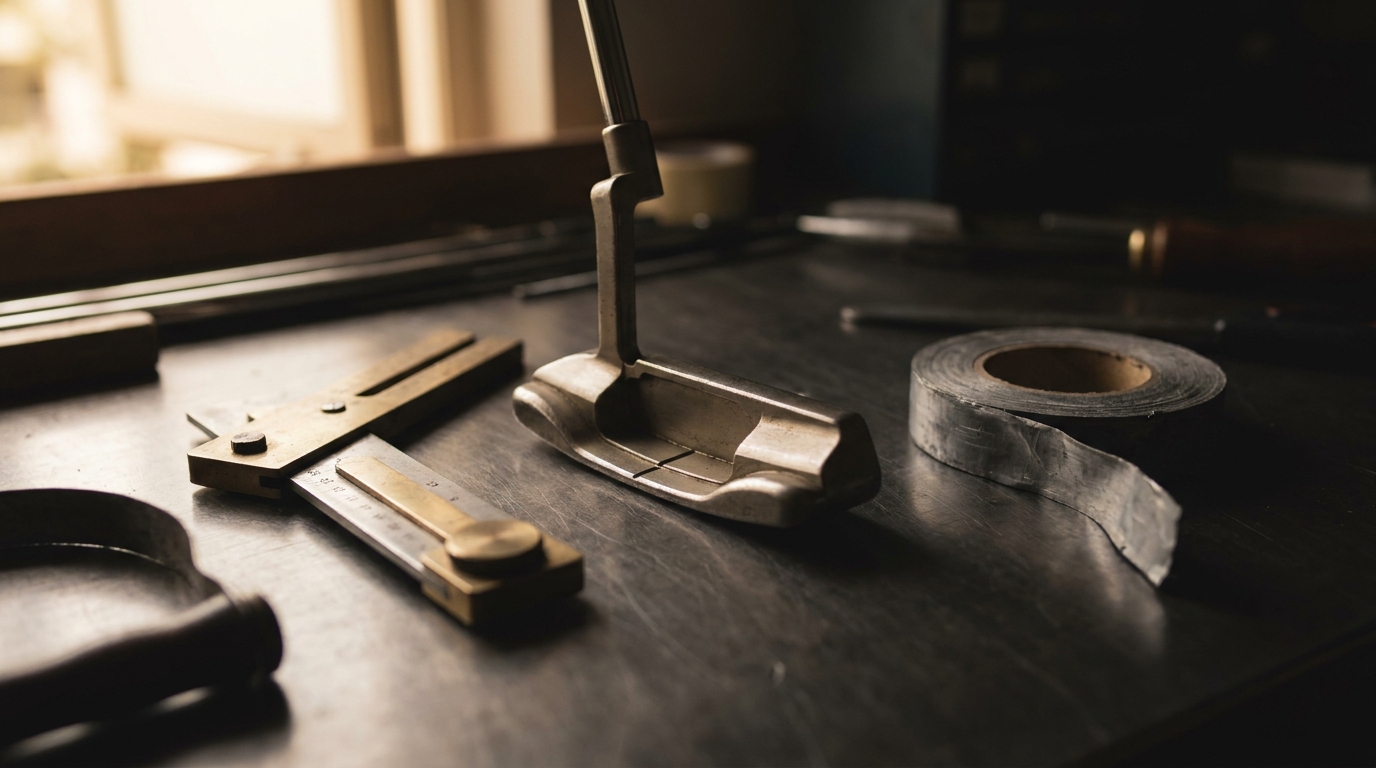
Think about the club you use most. It isn’t the driver. On a typical round the putter does more work than anything else in the bag, yet it’s the club golfers are least likely to have fitted. Most people buy one off a rack, like the look, and never think about it again.
We fit clubs for a living, and the putter is where we see the most easy shots left on the table. Not because putting is mysterious, but because the club itself is usually a little wrong for the person holding it, and nobody ever said. Here’s what a fitting looks at, and why it’s worth the time.
Why the putter decides your score
Count the strokes in your last round. A large share of them happened on the green, often around four in ten for an average golfer. The driver, for all the attention it gets, hits the ball a dozen or so times a round. The putter can hit it thirty times or more.
So the maths is blunt: the club you spend the least on fitting is the one you use most. A putter that starts the ball a fraction offline, or lifts it into a skid instead of a roll, costs you nothing dramatic on any single putt. It just leaks half-strokes all round, and you put it down to touch.
That’s the part worth sitting with. Bad putting often isn’t bad touch. It’s a putter that makes good touch harder than it needs to be.
What actually gets fitted on a putter
People assume a putter is just a putter. It isn’t. Here’s what a fitting works through, and each of these can move where your ball starts:
- Length. Too long and your hands pull in and the face aims left; too short and the reverse. Length sets your whole posture over the ball.
- Lie angle. If the toe or heel sits up at address, the face points off line before you’ve moved. A fitter matches lie to how you stand.
- Loft. A putter has loft to lift the ball out of its own resting dent into a clean roll. Too little or too much and it hops, then skids, all in the first foot.
- Head shape. Blade or mallet isn’t about looks. It changes how forgiving the head is and how it wants to swing, and it should match your stroke.
- Hosel and offset. How the shaft meets the head changes how the face rotates through the stroke. The wrong pairing fights your hands.
- Head weight. Heavier or lighter suits different greens and strokes. Right, and pace becomes something you feel rather than manage.
- Grip. Size and shape change how much your hands can twist the face. Thicker quietens busy hands; thinner gives feel back.
None of these is exotic. They’re just details, and a rack putter gets none of them checked against you.
Most golfers don’t need a better stroke to putt better. They need a putter that isn’t quietly aiming them offline before they’ve moved it. That’s a fit, not a lesson, and we only do the fit.
Why almost nobody fits their putter
There are a few reasons the putter gets skipped, and they’re all understandable:
- “Putting is all feel.” The most common one. Feel matters, but you can only feel accurately through a club that behaves. A wrong lie or loft is noise your hands spend all round cancelling out.
- It’s the cheap club. Drivers cost the most, so they get the fitting attention. The putter is the afterthought at the end of the shop visit.
- You bought it because you liked it. A putter is often an impulse, the head that looked right on the shelf. Looking right and fitting you are two different things.
- Nobody offered. Plenty of golfers have never been told a putter can be fitted at all. It can, and it’s one of the more worthwhile fits going.
What happens in the session
A putter fitting with us runs about 90 minutes, one golfer at a time, with Ian taking you through it start to finish. Bring the putter you use now, that’s the baseline.
We read your stroke on the mat over a lot of putts, well past a hundred, because one or two tell us nothing. We look at where the ball starts, how it comes off the face, and where the face is aimed at the moment it matters. Then we change one thing at a time, length, lie, loft, weight, grip, and you feel the difference rather than take our word for it.
By the end you have a spec: whether that’s your current head altered to fit or a different one that fits better. No pressure to buy on the day. You leave knowing what actually works for you, which is the point of coming.
Does your putter fit you?
A checklist is a nudge, not a diagnosis. Ninety minutes on the mat tells you far more than any set of boxes.
What it costs
Straightforward, and the same as our other single-club fittings:
| Session | Time | Price |
|---|---|---|
| Swing & equipment analysis | 30 min | SGD 50 |
We do not run a standalone putter fitting at the moment. Alterations to a putter you already own, a reshaft or a regrip, are quoted per job once we know what it needs.
The SGD 50 analysis is 30 minutes reading your swing and your current bag, putter included.
Curious whether your putter is quietly aiming you offline? The 30-minute analysis reads it on the launch monitor.
Book an analysis- You putt more than you drive. Around four in ten strokes happen on the green.
- A putter gets fitted like any club: length, lie, loft, head shape, hosel, weight, grip.
- Bad putting is often the club, not the touch. A wrong spec leaks half-strokes all round.
- You usually keep your head. Many putters can be altered to fit rather than replaced.
- A SGD 50 analysis is the way in: 30 minutes reading your swing and your bag.
Putter fitting sits inside the bigger picture of getting your whole bag right. For how fitting works across every club, what happens, what it costs, read our complete guide to golf club fitting in Singapore.
Common questions
What does putter fitting involve?
Is putter fitting worth it?
Do I need a new putter for a fitting?
How long does a putter fitting take?
How much does putter fitting cost in Singapore?

Ian, Precision Golf SG
Ian is a golf professional and club fitter. He fits and builds clubs, putters included, and wrote this from the fits he sees skipped most often. Meet the fitter.